


Ваше сообщение отправлено
и скоро будет рассмотрено
Ответ на Module 5, Страница 78-79, Номер 7 из ГДЗ по Английскому языку 9 класс: Ваулина (Учебник Spotlight)
ГДЗ (готовое домашние задание из решебника) по Английскому языку 9 класса авторов Ю.Е. Ваулина, Просвещение, 2010/2019/2023г. на Module 5, Страница 78-79, Номер 7. 5c Grammar in Use.Условие 2023 г.
7 Read the theory, then find the correct words.
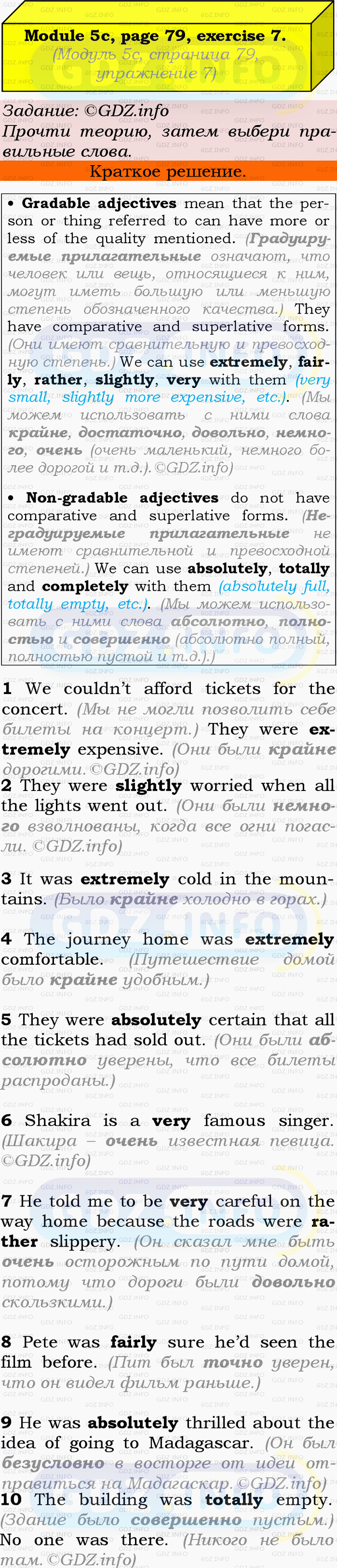
• Gradable adjectives mean that the person or thing referred to can have more or less of the quality mentioned. They have comparative and superlative forms (apart from very . We can use extremely, fairly, rather, slightly, very with them (very small, slightly more expensive, etc. .
• Non-gradable adjectives do not have comparative and superlative forms. We can use absolutely, totally and completely with them (absolutely full, totally empty, etc. .
1 We couldn't afford tickets for the concert. They were completely/extremely expensive.
2 They were slightly/totally worried when all the lights went out.
3 It was extremely/absolutely cold in the mountains.
4 The journey home was completely/extremely comfortable.
5 They were absolutely/rather certain that all the tickets had sold out.
6 Shakira is a very/completely famous singer.
7 He told me to be totally/very careful on the way home because the roads were rather/ absolutely slippery.
8 Pete was slightly/fairly sure he'd seen the film before.
9 He was absolutely/rather thrilled about the idea of going to Madagascar.
10 The building was fairly/totally empty. No one was there.
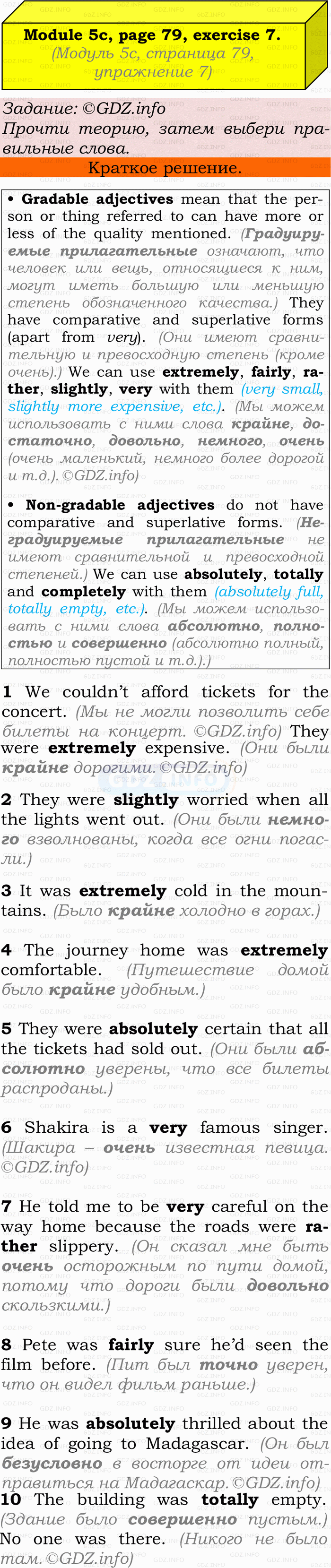
• Gradable adjectives mean that the person or thing referred to can have more or less of the quality mentioned. They have comparative and superlative forms (apart from very . We can use extremely, fairly, rather, slightly, very with them (very small, slightly more expensive, etc. .
• Non-gradable adjectives do not have comparative and superlative forms. We can use absolutely, totally and completely with them (absolutely full, totally empty, etc. .
1 We couldn't afford tickets for the concert. They were completely/extremely expensive.
2 They were slightly/totally worried when all the lights went out.
3 It was extremely/absolutely cold in the mountains.
4 The journey home was completely/extremely comfortable.
5 They were absolutely/rather certain that all the tickets had sold out.
6 Shakira is a very/completely famous singer.
7 He told me to be totally/very careful on the way home because the roads were rather/ absolutely slippery.
8 Pete was slightly/fairly sure he'd seen the film before.
9 He was absolutely/rather thrilled about the idea of going to Madagascar.
10 The building was fairly/totally empty. No one was there.
Решение №1 2023 г.
Подробное решение
- Белый фонпереписывать в тетрадь
- Цветной фонтеория и пояснения

ОТКРЫТЬ РЕШЕНИЕ
Другие задачи из этого решебника
Условие 2019 г.
7 Read the theory, then find the correct words.
• Gradable adjectives mean that the person or thing referred to can have more or less of the quality mentioned. They have comparative and superlative forms (apart from very . We can use extremely, fairly, rather, slightly, very with them (very small, slightly more expensive, etc. .
• Non-gradable adjectives do not have comparative and superlative forms. We can use absolutely, totally and completely with them (absolutely full, totally empty, etc. .
1 We couldn't afford tickets for the concert. They were completely/extremely expensive.
2 They were slightly/totally worried when all the lights went out.
3 It was extremely/absolutely cold in the mountains.
4 The journey home was completely/extremely comfortable.
5 They were absolutely/rather certain that all the tickets had sold out.
6 Shakira is a very/completely famous singer.
7 He told me to be totally/very careful on the way home because the roads were rather/ absolutely slippery.
8 Pete was slightly/fairly sure he'd seen the film before.
9 He was absolutely/rather thrilled about the idea of going to Madagascar.
10 The building was fairly/totally empty. No one was there.
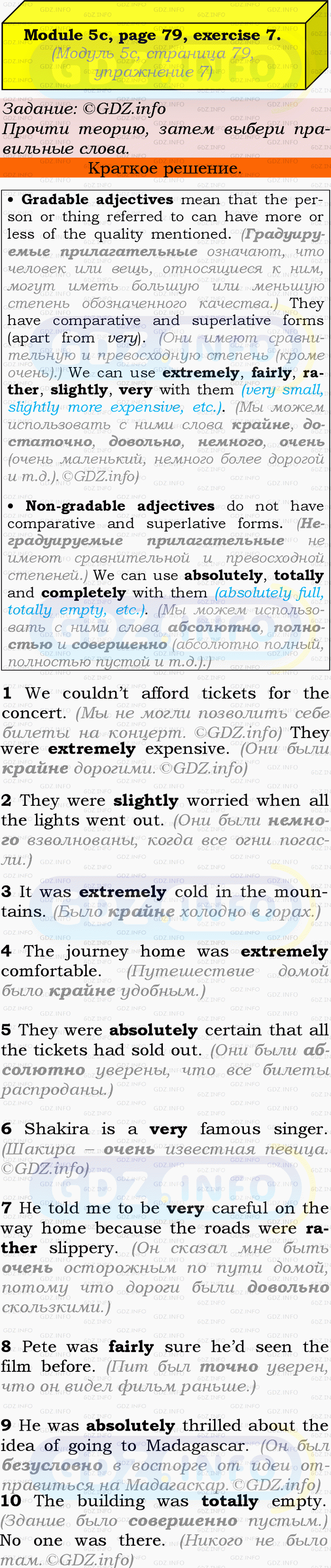
• Gradable adjectives mean that the person or thing referred to can have more or less of the quality mentioned. They have comparative and superlative forms (apart from very . We can use extremely, fairly, rather, slightly, very with them (very small, slightly more expensive, etc. .
• Non-gradable adjectives do not have comparative and superlative forms. We can use absolutely, totally and completely with them (absolutely full, totally empty, etc. .
1 We couldn't afford tickets for the concert. They were completely/extremely expensive.
2 They were slightly/totally worried when all the lights went out.
3 It was extremely/absolutely cold in the mountains.
4 The journey home was completely/extremely comfortable.
5 They were absolutely/rather certain that all the tickets had sold out.
6 Shakira is a very/completely famous singer.
7 He told me to be totally/very careful on the way home because the roads were rather/ absolutely slippery.
8 Pete was slightly/fairly sure he'd seen the film before.
9 He was absolutely/rather thrilled about the idea of going to Madagascar.
10 The building was fairly/totally empty. No one was there.
Решение №1 2019 г.
Подробное решение
- Белый фонпереписывать в тетрадь
- Цветной фонтеория и пояснения

ОТКРЫТЬ РЕШЕНИЕ
Другие задачи из этого решебника
Условие 2010 г.
7 Read the theory, then choose the correct words.
• Gradable adjectives mean that the person or thing referred to can have more or less of the quality mentioned. They have comparative and superlative forms (apart from very . We can use extremely, fairly, rather, slightly, very with them (very small, slightly more expensive, etc. .
• Non-gradable adjectives do not have comparative and superlative forms. We can use absolutely, totally and completely with them (absolutely full, totally empty, etc. .
1 We couldn't afford tickets for the concert. They were completely/extremely expensive.
2 They were slightly/totally worried when all the lights went out.
3 It was extremely/absolutely cold in the mountains.
4 The journey home was completely/extremely comfortable.
5 They were absolutely/rather certain that all the tickets had sold out.
6 Shakira is a very/completely famous singer.
7 He told me to be totally/very careful on the way home because the roads were rather/ absolutely slippery.
8 Pete was slightly/fairly sure he'd seen the film before.
9 He was absolutely/rather thrilled about the idea of going to Madagascar.
10 The building was fairly/totally empty. No one was there.
• Gradable adjectives mean that the person or thing referred to can have more or less of the quality mentioned. They have comparative and superlative forms (apart from very . We can use extremely, fairly, rather, slightly, very with them (very small, slightly more expensive, etc. .
• Non-gradable adjectives do not have comparative and superlative forms. We can use absolutely, totally and completely with them (absolutely full, totally empty, etc. .
1 We couldn't afford tickets for the concert. They were completely/extremely expensive.
2 They were slightly/totally worried when all the lights went out.
3 It was extremely/absolutely cold in the mountains.
4 The journey home was completely/extremely comfortable.
5 They were absolutely/rather certain that all the tickets had sold out.
6 Shakira is a very/completely famous singer.
7 He told me to be totally/very careful on the way home because the roads were rather/ absolutely slippery.
8 Pete was slightly/fairly sure he'd seen the film before.
9 He was absolutely/rather thrilled about the idea of going to Madagascar.
10 The building was fairly/totally empty. No one was there.
Решение №1 2010 г.
Подробное решение
- Белый фонпереписывать в тетрадь
- Цветной фонтеория и пояснения

ОТКРЫТЬ РЕШЕНИЕ
Другие задачи из этого решебника
Перейти к учебнику
2013
2023
ГДЗ по Геометрии 7-9 класс: Атанасян Л.С.
Издатель: Л.С. Атанасян, В. Ф. Бутузов, С. Б. Кадомцев, 2013г. / 2023-2026г.
2014

2023
ГДЗ по Алгебре 9 класс: Макарычев Ю.Н.
Издатель: Ю.Н. Макарычев, Н.Г. Миндюк, К.И. Нешков, С.Б. Суворова, 2014 / 2023-2026г.

2019

2023
ГДЗ по Русскому языку 9 класс: Бархударов С.Г.
Издатель: С.Г. Бархударов, С.Е. Крючков, Л.Ю. Максимов и др. 2019г. / 2023г.

2023
ГДЗ по Химии 9 класс: Габриелян, Остроумов, Сладков
Издатель: Габриелян Остроумов, Сладков. Просвещение, 2023-2025г

2026
ГДЗ по Физике 9 класс: Пёрышкин, Иванов
Издатель: И.М. Пёрышкин. Просвещение, 2023-2026г.
2014
ГДЗ по Английскому языку 9 класс: Афанасьева (Учебник Rainbow)
Издатель: О.В. Афанасьева, И.В. Михеева, К.М. Баранова 2014-2021г.

ГДЗ по Английскому языку: Голицынский Ю.Б.
Издатель: Ю. Б. Голицынский, 2011-2017г.