


Ваше сообщение отправлено
и скоро будет рассмотрено
Ответ на Module 2, Страница 26-27, Номер 6 из ГДЗ по Английскому языку 9 класс: Ваулина (Учебник Spotlight)
ГДЗ (готовое домашние задание из решебника) по Английскому языку 9 класса авторов Ю.Е. Ваулина, Просвещение, 2010/2019/2023г. на Module 2, Страница 26-27, Номер 6. 2a Reading & Vocabulary.Условие 2023 г.
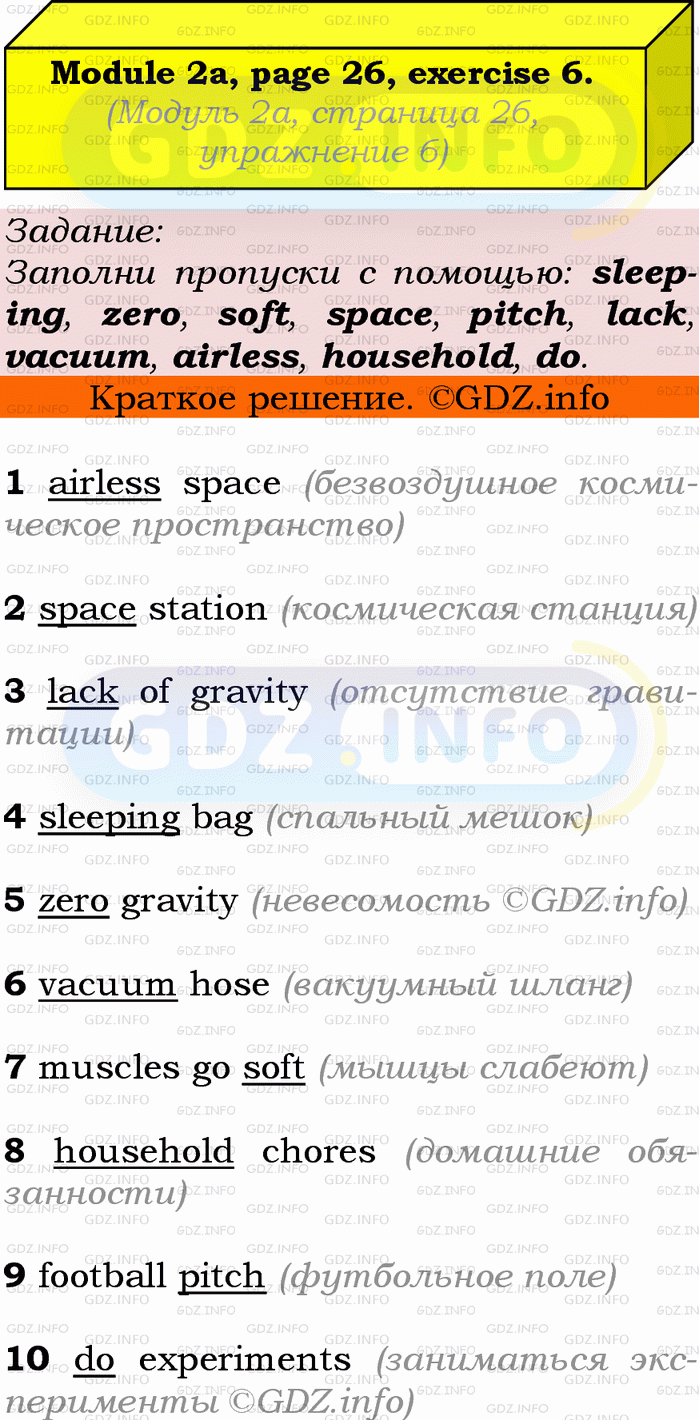
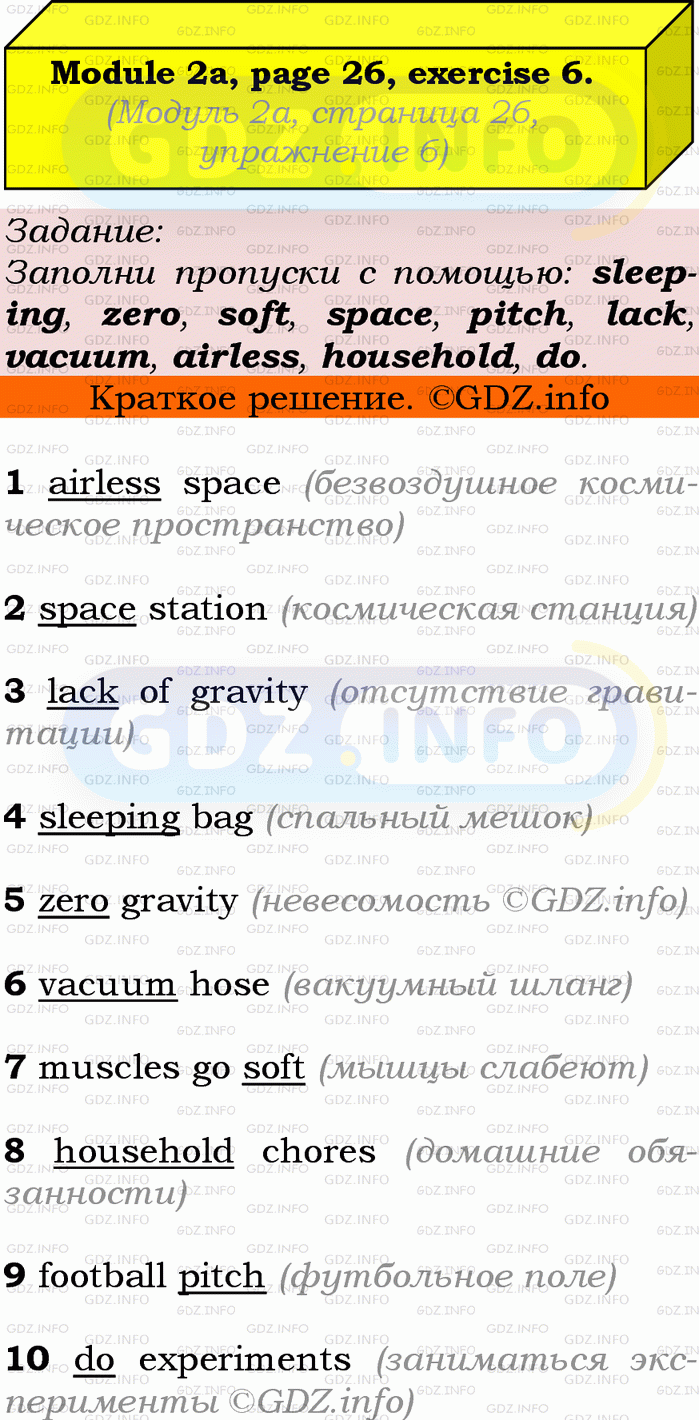
6 Complete with: sleeping, zero, soft, space, pitch, lack, vacuum, airless, household, do.
А) Astronauts working on the giant InternationalSpace Station (ISS) live a long way from home. The ISSis situated three hundred and sixty kilometres abovethe surface of Earth. That may seem an impressivedistance but the speed at which astronauts travelthrough space is even more amazing. Flying throughdark, airless space at almost thirty thousand kilometresan hour is hard to imagine. It’s fast enough to travelfrom Earth to the Moon and back in one day!
B) Living in zero gravity means there are no nice hotshowers in the morning; the water droplets wouldsimply float away. Instead, astronauts use a vacuum hoseto wash with. They don’t have a sink to wash their hair in,so they use a no-rinse shampoo which you just combthrough the hair. After brushing their teeth, there’snowhere to spit out the toothpaste; the astronautssimply swallow it!
C) Doing household chores on the ISS is part of anastronaut’s daily routine. As dangerous bacteria growquickly in zero gravity, the astronauts clean the wholestation every day, which is about the size of a footballpitch! There is one chore they do escape on board,though. There’s no washing-up after meals. Theastronauts put their dirty dishes into plastic bags andsend them back to Earth.
D) When it comes to sleeping in space, astronautsjust strap themselves into a sleeping bag on the wall.That’s to avoid bumping into any computer controls. It’s a truly relaxing experience because you don’t needa pillow or mattress, so nothing presses against theskin. It’s important to cover the eyes, however, to blockout the light of the sun, as the sun rises and sets every45 minutes when you are orbiting Earth.
E) When muscles don’t have to work against gravityas they do here on Earth, they go soft. So the residentsof the ISS spend two hours a day working out. Theyhave all the usual machines you would expect – exercisebikes, rowing machines, treadmills. But the lack ofgravity means that heavy weights don’t feel heavy at all.Astronauts use specially designed weightliftingequipment to ensure they get a proper workout.
F) At mealtimes, astronauts ‘post’ food packagesinto a special tray and then strap the tray to their legs.Otherwise, the meal would float away! Salt and peppercome in liquid form. If astronauts seasoned their foodin the normal way, the particles could float into airvents or equipment and cause damage. There areovens to heat up meals, but no fridges in space. Foodhas to be specially stored to keep it fresh.
G) When astronauts aren’t doing experiments orrepairing equipment, they take time out to do otherthings, just like the rest of us. Reading books, watchingfilms and sending emails to people back home are allpopular activities. But one of their favourite activities isphotography; most of all, astronauts like to stare out ofthe window and take pictures of their real home, Earth!
А) Astronauts working on the giant InternationalSpace Station (ISS) live a long way from home. The ISSis situated three hundred and sixty kilometres abovethe surface of Earth. That may seem an impressivedistance but the speed at which astronauts travelthrough space is even more amazing. Flying throughdark, airless space at almost thirty thousand kilometresan hour is hard to imagine. It’s fast enough to travelfrom Earth to the Moon and back in one day!
B) Living in zero gravity means there are no nice hotshowers in the morning; the water droplets wouldsimply float away. Instead, astronauts use a vacuum hoseto wash with. They don’t have a sink to wash their hair in,so they use a no-rinse shampoo which you just combthrough the hair. After brushing their teeth, there’snowhere to spit out the toothpaste; the astronautssimply swallow it!
C) Doing household chores on the ISS is part of anastronaut’s daily routine. As dangerous bacteria growquickly in zero gravity, the astronauts clean the wholestation every day, which is about the size of a footballpitch! There is one chore they do escape on board,though. There’s no washing-up after meals. Theastronauts put their dirty dishes into plastic bags andsend them back to Earth.
D) When it comes to sleeping in space, astronautsjust strap themselves into a sleeping bag on the wall.That’s to avoid bumping into any computer controls. It’s a truly relaxing experience because you don’t needa pillow or mattress, so nothing presses against theskin. It’s important to cover the eyes, however, to blockout the light of the sun, as the sun rises and sets every45 minutes when you are orbiting Earth.
E) When muscles don’t have to work against gravityas they do here on Earth, they go soft. So the residentsof the ISS spend two hours a day working out. Theyhave all the usual machines you would expect – exercisebikes, rowing machines, treadmills. But the lack ofgravity means that heavy weights don’t feel heavy at all.Astronauts use specially designed weightliftingequipment to ensure they get a proper workout.
F) At mealtimes, astronauts ‘post’ food packagesinto a special tray and then strap the tray to their legs.Otherwise, the meal would float away! Salt and peppercome in liquid form. If astronauts seasoned their foodin the normal way, the particles could float into airvents or equipment and cause damage. There areovens to heat up meals, but no fridges in space. Foodhas to be specially stored to keep it fresh.
G) When astronauts aren’t doing experiments orrepairing equipment, they take time out to do otherthings, just like the rest of us. Reading books, watchingfilms and sending emails to people back home are allpopular activities. But one of their favourite activities isphotography; most of all, astronauts like to stare out ofthe window and take pictures of their real home, Earth!
Решение №1 2023 г.
Подробное решение
- Белый фонпереписывать в тетрадь
- Цветной фонтеория и пояснения

ОТКРЫТЬ РЕШЕНИЕ
Другие задачи из этого решебника
Условие 2019 г.
6 Complete with: sleeping, zero, soft, space, pitch, lack, vacuum, airless, household, do.
А) Astronauts working on the giant InternationalSpace Station (ISS) live a long way from home. The ISSis situated three hundred and sixty kilometres abovethe surface of Earth. That may seem an impressivedistance but the speed at which astronauts travelthrough space is even more amazing. Flying throughdark, airless space at almost thirty thousand kilometresan hour is hard to imagine. It’s fast enough to travelfrom Earth to the Moon and back in one day!
B) Living in zero gravity means there are no nice hotshowers in the morning; the water droplets wouldsimply float away. Instead, astronauts use a vacuum hoseto wash with. They don’t have a sink to wash their hair in,so they use a no-rinse shampoo which you just combthrough the hair. After brushing their teeth, there’snowhere to spit out the toothpaste; the astronautssimply swallow it!
C) Doing household chores on the ISS is part of anastronaut’s daily routine. As dangerous bacteria growquickly in zero gravity, the astronauts clean the wholestation every day, which is about the size of a footballpitch! There is one chore they do escape on board,though. There’s no washing-up after meals. Theastronauts put their dirty dishes into plastic bags andsend them back to Earth.
D) When it comes to sleeping in space, astronautsjust strap themselves into a sleeping bag on the wall.That’s to avoid bumping into any computer controls. It’s a truly relaxing experience because you don’t needa pillow or mattress, so nothing presses against theskin. It’s important to cover the eyes, however, to blockout the light of the sun, as the sun rises and sets every45 minutes when you are orbiting Earth.
E) When muscles don’t have to work against gravityas they do here on Earth, they go soft. So the residentsof the ISS spend two hours a day working out. Theyhave all the usual machines you would expect – exercisebikes, rowing machines, treadmills. But the lack ofgravity means that heavy weights don’t feel heavy at all.Astronauts use specially designed weightliftingequipment to ensure they get a proper workout.
F) At mealtimes, astronauts ‘post’ food packagesinto a special tray and then strap the tray to their legs.Otherwise, the meal would float away! Salt and peppercome in liquid form. If astronauts seasoned their foodin the normal way, the particles could float into airvents or equipment and cause damage. There areovens to heat up meals, but no fridges in space. Foodhas to be specially stored to keep it fresh.
G) When astronauts aren’t doing experiments orrepairing equipment, they take time out to do otherthings, just like the rest of us. Reading books, watchingfilms and sending emails to people back home are allpopular activities. But one of their favourite activities isphotography; most of all, astronauts like to stare out ofthe window and take pictures of their real home, Earth!
[Fill-in grid from PDF: 1 .... space, 2 .... station, 3 .... of gravity, 4 .... dark, 5 .... black, 6 .... cleaners, 7 .... bags, 8 .... food, 9 .... exercises, 10 .... experiments]
А) Astronauts working on the giant InternationalSpace Station (ISS) live a long way from home. The ISSis situated three hundred and sixty kilometres abovethe surface of Earth. That may seem an impressivedistance but the speed at which astronauts travelthrough space is even more amazing. Flying throughdark, airless space at almost thirty thousand kilometresan hour is hard to imagine. It’s fast enough to travelfrom Earth to the Moon and back in one day!
B) Living in zero gravity means there are no nice hotshowers in the morning; the water droplets wouldsimply float away. Instead, astronauts use a vacuum hoseto wash with. They don’t have a sink to wash their hair in,so they use a no-rinse shampoo which you just combthrough the hair. After brushing their teeth, there’snowhere to spit out the toothpaste; the astronautssimply swallow it!
C) Doing household chores on the ISS is part of anastronaut’s daily routine. As dangerous bacteria growquickly in zero gravity, the astronauts clean the wholestation every day, which is about the size of a footballpitch! There is one chore they do escape on board,though. There’s no washing-up after meals. Theastronauts put their dirty dishes into plastic bags andsend them back to Earth.
D) When it comes to sleeping in space, astronautsjust strap themselves into a sleeping bag on the wall.That’s to avoid bumping into any computer controls. It’s a truly relaxing experience because you don’t needa pillow or mattress, so nothing presses against theskin. It’s important to cover the eyes, however, to blockout the light of the sun, as the sun rises and sets every45 minutes when you are orbiting Earth.
E) When muscles don’t have to work against gravityas they do here on Earth, they go soft. So the residentsof the ISS spend two hours a day working out. Theyhave all the usual machines you would expect – exercisebikes, rowing machines, treadmills. But the lack ofgravity means that heavy weights don’t feel heavy at all.Astronauts use specially designed weightliftingequipment to ensure they get a proper workout.
F) At mealtimes, astronauts ‘post’ food packagesinto a special tray and then strap the tray to their legs.Otherwise, the meal would float away! Salt and peppercome in liquid form. If astronauts seasoned their foodin the normal way, the particles could float into airvents or equipment and cause damage. There areovens to heat up meals, but no fridges in space. Foodhas to be specially stored to keep it fresh.
G) When astronauts aren’t doing experiments orrepairing equipment, they take time out to do otherthings, just like the rest of us. Reading books, watchingfilms and sending emails to people back home are allpopular activities. But one of their favourite activities isphotography; most of all, astronauts like to stare out ofthe window and take pictures of their real home, Earth!
[Fill-in grid from PDF: 1 .... space, 2 .... station, 3 .... of gravity, 4 .... dark, 5 .... black, 6 .... cleaners, 7 .... bags, 8 .... food, 9 .... exercises, 10 .... experiments]
Решение №1 2019 г.
Подробное решение
- Белый фонпереписывать в тетрадь
- Цветной фонтеория и пояснения

ОТКРЫТЬ РЕШЕНИЕ
Другие задачи из этого решебника
Условие 2010 г.
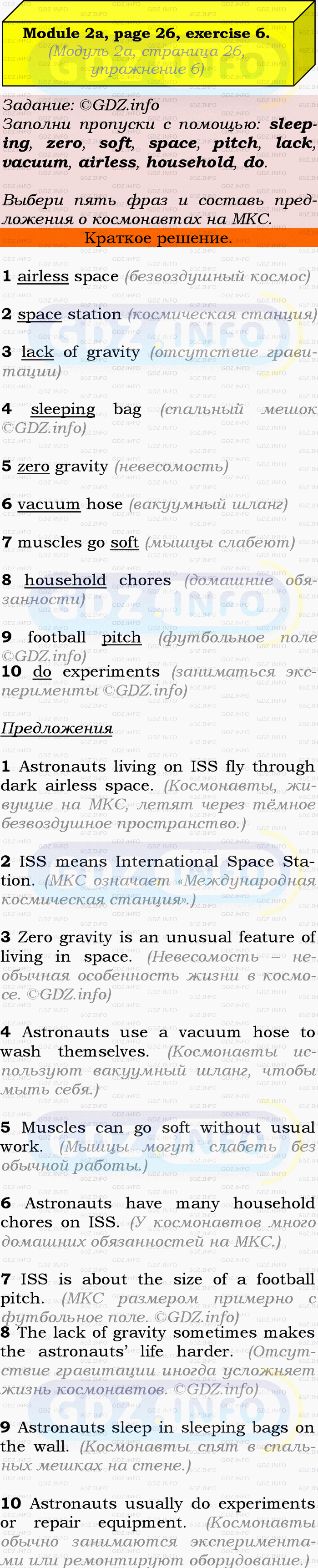
6 Fill in: sleeping, zero, soft, space, pitch, lack, vacuum, airless, household, do.
Choose five phrases and make sentences about the astronauts on the ISS.
1) How would you like to live three hundred and sixty kilometers above the Earth, flying at almost thirty thousand kilometres an hour through dark, airless space? Well, that's exactly how the astronauts working on the giant International Space Station (ISS) live. 'Cool!' you might say. Well... maybe. Let's take a look at what it's really like to live in space.
2) Living in zero gravity means doing lots of things differently. First of all, you can forget about having a nice hot shower in the morning, as the water droplets would simply float away. Astronauts have to use a vacuum hose to wash with. Also, when muscles don't have to work against gravity as they do here on Earth, they go soft. So the residents of the ISS actually spend 2 hours a day working out on exercise bikes and rowing machines.
3) There's no escape from household chores on the ISS. As dangerous bacteria grow quickly in zero gravity, the astronauts clean the whole station every day, which is about the size of a football pitch! Also the lack of gravity makes the simplest things in life seem quite weird! Take eating for example, to stop their meals floating away, astronauts have to 'post' food packages into a special tray and then strap the tray to their legs. At least there's no washing up to do, though. The astronauts simply put their dirty dishes and rubbish into plastic bags and send them back to Earth.
4) When it comes to sleeping, there's no need for a bedroom! The astronauts could sleep anywhere, but they can't risk bumping into any computer controls so they strap themselves into a sleeping bag on the wall. It's a truly relaxing experience, as nothing presses against the skin. It's important to cover your eyes, however, to block out the light of the sun as the sun rises and sets every 45 minutes when you are orbiting the Earth.
5) So, when astronauts aren't doing experiments or chores or repairing equipment, do they get any free time? Well, a little! They often send emails back home, read books or watch movies, but most of all they like to stare out of the window and take pictures of their real home, Earth!
Choose five phrases and make sentences about the astronauts on the ISS.
1) How would you like to live three hundred and sixty kilometers above the Earth, flying at almost thirty thousand kilometres an hour through dark, airless space? Well, that's exactly how the astronauts working on the giant International Space Station (ISS) live. 'Cool!' you might say. Well... maybe. Let's take a look at what it's really like to live in space.
2) Living in zero gravity means doing lots of things differently. First of all, you can forget about having a nice hot shower in the morning, as the water droplets would simply float away. Astronauts have to use a vacuum hose to wash with. Also, when muscles don't have to work against gravity as they do here on Earth, they go soft. So the residents of the ISS actually spend 2 hours a day working out on exercise bikes and rowing machines.
3) There's no escape from household chores on the ISS. As dangerous bacteria grow quickly in zero gravity, the astronauts clean the whole station every day, which is about the size of a football pitch! Also the lack of gravity makes the simplest things in life seem quite weird! Take eating for example, to stop their meals floating away, astronauts have to 'post' food packages into a special tray and then strap the tray to their legs. At least there's no washing up to do, though. The astronauts simply put their dirty dishes and rubbish into plastic bags and send them back to Earth.
4) When it comes to sleeping, there's no need for a bedroom! The astronauts could sleep anywhere, but they can't risk bumping into any computer controls so they strap themselves into a sleeping bag on the wall. It's a truly relaxing experience, as nothing presses against the skin. It's important to cover your eyes, however, to block out the light of the sun as the sun rises and sets every 45 minutes when you are orbiting the Earth.
5) So, when astronauts aren't doing experiments or chores or repairing equipment, do they get any free time? Well, a little! They often send emails back home, read books or watch movies, but most of all they like to stare out of the window and take pictures of their real home, Earth!
Решение №1 2010 г.
Подробное решение
- Белый фонпереписывать в тетрадь
- Цветной фонтеория и пояснения

ОТКРЫТЬ РЕШЕНИЕ
Другие задачи из этого решебника
Перейти к учебнику
2013
2023
ГДЗ по Геометрии 7-9 класс: Атанасян Л.С.
Издатель: Л.С. Атанасян, В. Ф. Бутузов, С. Б. Кадомцев, 2013г. / 2023-2026г.
2014

2023
ГДЗ по Алгебре 9 класс: Макарычев Ю.Н.
Издатель: Ю.Н. Макарычев, Н.Г. Миндюк, К.И. Нешков, С.Б. Суворова, 2014 / 2023-2026г.
2019

2023
ГДЗ по Русскому языку 9 класс: Бархударов С.Г.
Издатель: С.Г. Бархударов, С.Е. Крючков, Л.Ю. Максимов и др. 2019г. / 2023г.

2023
ГДЗ по Химии 9 класс: Габриелян, Остроумов, Сладков
Издатель: Габриелян Остроумов, Сладков. Просвещение, 2023-2025г

2026
ГДЗ по Физике 9 класс: Пёрышкин, Иванов
Издатель: И.М. Пёрышкин. Просвещение, 2023-2026г.

2014
ГДЗ по Английскому языку 9 класс: Афанасьева (Учебник Rainbow)
Издатель: О.В. Афанасьева, И.В. Михеева, К.М. Баранова 2014-2021г.
ГДЗ по Английскому языку: Голицынский Ю.Б.
Издатель: Ю. Б. Голицынский, 2011-2017г.