


Ваше сообщение отправлено
и скоро будет рассмотрено
Ответ на Exam Practice Section, Номер 10 из ГДЗ по Английскому языку 9 класс: Ваулина (Учебник Spotlight)
ГДЗ (готовое домашние задание из решебника) по Английскому языку 9 класса авторов Ю.Е. Ваулина, Просвещение, 2010/2019/2023г. на Exam Practice Section, Номер 10.Условие 2023 г.
Read the text. Decide which of the statements (1-8) are T (True), F (False) or NS (Not Stated). Write down the number you think is the right answer in the box.
The longest rail journey
‘TheTrans-Siberian is the big train ride. All the rest are peanuts.’ Eric Newby. The Big Red Train Ride.
Russia is by far the largest country in the world, stretching east to westacross two continents, sixteen time zones and over 10,000 km. That’s why ithas the longest railway in the world – the Trans-Siberian Railway, which connects Moscow with Vladivostok on the Sea of Japan, over 9,500km away. Over 150 years old, it is still a main connection, with plans tomake it an indispensable part of East-West trade.
Though mainly a freight train, carrying goods from the East to Russia and therest of Europe, it has long attracted the more daring traveller. For seven dayspassengers sit in their carriages, staring out as the train crosses mighty riverslike the Volga, skirts mountain ranges like the Urals and pulls across theseemingly endless Siberian Steppes. Such a journey is not for everyone!
As Siberia developed in the late 1800s, the need for such a railway wascreated. Though the huge empty lands had enormous potential foragriculture, roads were few and those that did exist were often impassableduring the winter months. Instead, people usually got around by river – andon the ice of those same rivers during the savagely cold Siberian winters –but this was not an ideal solution. In March 1880, future Tsar Nicholas IIstarted building the railway in Vladivostok.
Soon tracks began to be laid in the west, too, the plan being to meet inthe centre. In 1890, a bridge was built across the Ural River and thewestern half of the railway entered Asia. The bridge across the river Obwas constructed in 1898, and in the same year the first train reachedIrkutsk on the shores of Lake Baikal. But it was not until 1916 that thefinal section was completed, just north of the border with China, and Moscow and Vladivostok were finally joined.
The railway soon formed a successful link between Siberia and Centraland European Russia, both physically and economically. It was, in fact, toosuccessful. So much cheap grain started flooding the west that the farmers of Central Russia were threatened with economic ruin. This ledthe Tsar to charge a tax on Siberian wheat. In Siberia, they reacted byopening up mills and bakeries along the border, so the grain could beconverted into a non-taxed product. Another way to escape the tax wasfor Siberian farmers to switch their main crop to maize.
Thanks to the railway, people were able to move to Siberia more easily in order to farm the land there. Between 1906 and 1914 alone, the population grew by 4 million and today there are 25 million people in Siberia. Although agriculture is still important, mining has taken ever as the region's biggest wealth producer. Siberia is one of the richest sources of minerals, precious metals, gems and fossil fuels in the world.
The railway today continues to be an extremely important commercial route. Every year, it carries around 200,020 containers from the East to Europe. But Russian Railways has further ambitions. In fact, they plan to double that number, since trade with China has increased greatly and China is now exporting a rising number of goods to Russia.
That woJd mean speeding up the time of journeys so that ca'go can get to its destination more quickly. In fact, a new href speed train is being planned which could run parallel to the old Trans-Sibe'ian line and get from Moscow to Beijing in just 48 hours! ft would be capable of dong around 350 miles per hoir - thats 2,5 times as fast as the Trans-Sibenan runs at present!
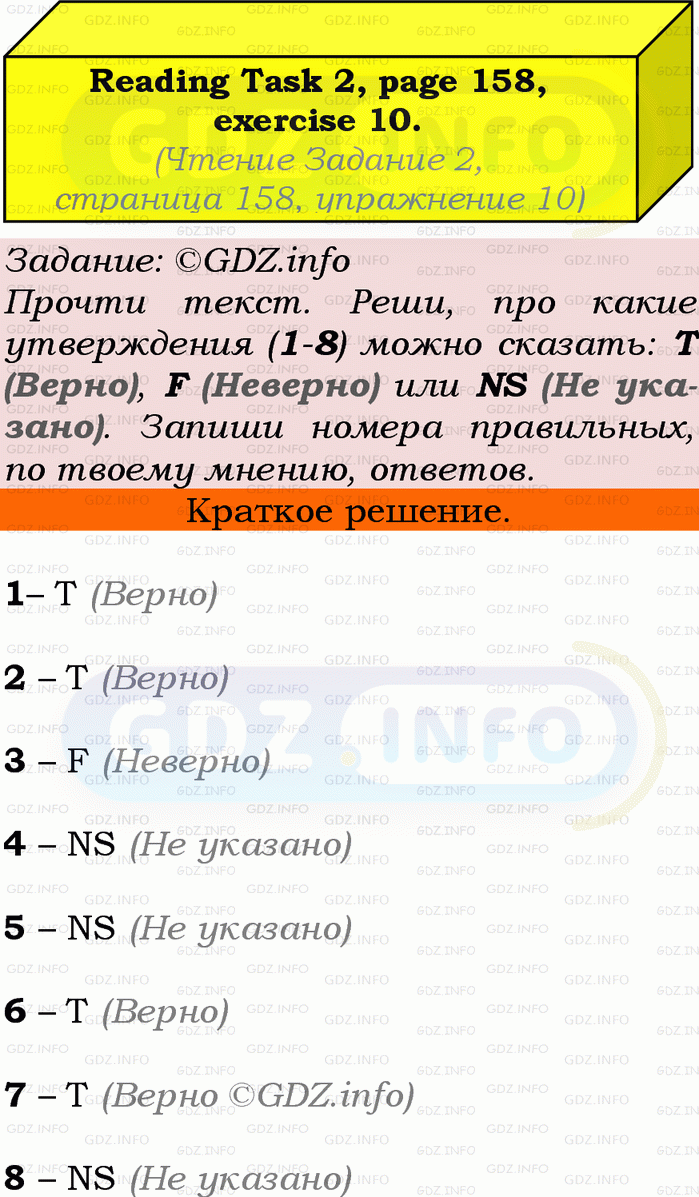
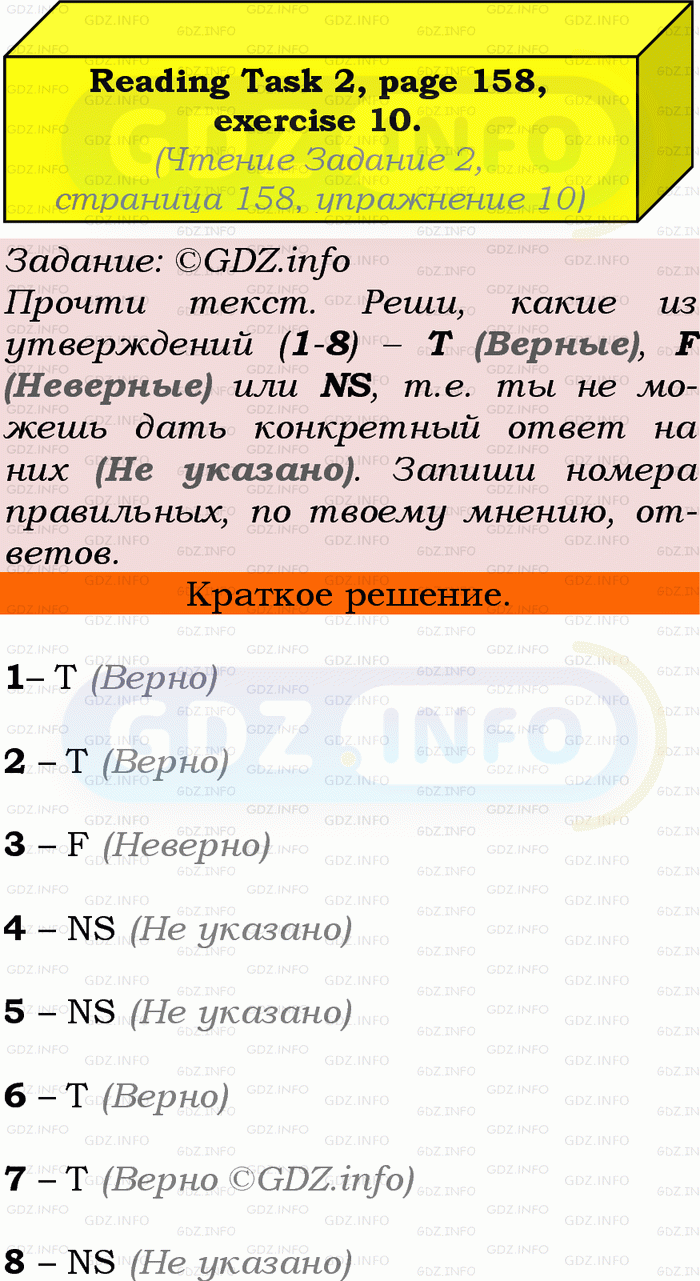
1 One end of the Trans-Siberian Railway is on the coast.
2 Only certain kinds of tourists would enjoy the rail journeyacross Siberia.
3 Before the railway, travel was impossible in Siberia inwinter.
4 The bridge across the Ural took longer to build than thebridge across the Ob.
5 Today maize is one of Siberia's biggest crops.
6 Siberia’s population continues to increase.
7 Russian Railways wants to become a major transporter ofChinese goods.
8 The new fast goods train will not take passengers.
The longest rail journey
‘TheTrans-Siberian is the big train ride. All the rest are peanuts.’ Eric Newby. The Big Red Train Ride.
Russia is by far the largest country in the world, stretching east to westacross two continents, sixteen time zones and over 10,000 km. That’s why ithas the longest railway in the world – the Trans-Siberian Railway, which connects Moscow with Vladivostok on the Sea of Japan, over 9,500km away. Over 150 years old, it is still a main connection, with plans tomake it an indispensable part of East-West trade.
Though mainly a freight train, carrying goods from the East to Russia and therest of Europe, it has long attracted the more daring traveller. For seven dayspassengers sit in their carriages, staring out as the train crosses mighty riverslike the Volga, skirts mountain ranges like the Urals and pulls across theseemingly endless Siberian Steppes. Such a journey is not for everyone!
As Siberia developed in the late 1800s, the need for such a railway wascreated. Though the huge empty lands had enormous potential foragriculture, roads were few and those that did exist were often impassableduring the winter months. Instead, people usually got around by river – andon the ice of those same rivers during the savagely cold Siberian winters –but this was not an ideal solution. In March 1880, future Tsar Nicholas IIstarted building the railway in Vladivostok.
Soon tracks began to be laid in the west, too, the plan being to meet inthe centre. In 1890, a bridge was built across the Ural River and thewestern half of the railway entered Asia. The bridge across the river Obwas constructed in 1898, and in the same year the first train reachedIrkutsk on the shores of Lake Baikal. But it was not until 1916 that thefinal section was completed, just north of the border with China, and Moscow and Vladivostok were finally joined.
The railway soon formed a successful link between Siberia and Centraland European Russia, both physically and economically. It was, in fact, toosuccessful. So much cheap grain started flooding the west that the farmers of Central Russia were threatened with economic ruin. This ledthe Tsar to charge a tax on Siberian wheat. In Siberia, they reacted byopening up mills and bakeries along the border, so the grain could beconverted into a non-taxed product. Another way to escape the tax wasfor Siberian farmers to switch their main crop to maize.
Thanks to the railway, people were able to move to Siberia more easily in order to farm the land there. Between 1906 and 1914 alone, the population grew by 4 million and today there are 25 million people in Siberia. Although agriculture is still important, mining has taken ever as the region's biggest wealth producer. Siberia is one of the richest sources of minerals, precious metals, gems and fossil fuels in the world.
The railway today continues to be an extremely important commercial route. Every year, it carries around 200,020 containers from the East to Europe. But Russian Railways has further ambitions. In fact, they plan to double that number, since trade with China has increased greatly and China is now exporting a rising number of goods to Russia.
That woJd mean speeding up the time of journeys so that ca'go can get to its destination more quickly. In fact, a new href speed train is being planned which could run parallel to the old Trans-Sibe'ian line and get from Moscow to Beijing in just 48 hours! ft would be capable of dong around 350 miles per hoir - thats 2,5 times as fast as the Trans-Sibenan runs at present!
1 One end of the Trans-Siberian Railway is on the coast.
2 Only certain kinds of tourists would enjoy the rail journeyacross Siberia.
3 Before the railway, travel was impossible in Siberia inwinter.
4 The bridge across the Ural took longer to build than thebridge across the Ob.
5 Today maize is one of Siberia's biggest crops.
6 Siberia’s population continues to increase.
7 Russian Railways wants to become a major transporter ofChinese goods.
8 The new fast goods train will not take passengers.
Решение №1 2023 г.
Подробное решение
- Белый фонпереписывать в тетрадь
- Цветной фонтеория и пояснения

ОТКРЫТЬ РЕШЕНИЕ
Другие задачи из этого решебника
Условие 2019 г.
Read the text. Decide which of the statements (1-8)are T (True), F (False) or NS, meaning that you can’t give aclear answer to them (Not Stated). Write down the numberyou think is the right answer in the box.
The longest rail journey
‘TheTrans-Siberian is the big train ride. All the rest are peanuts.’ Eric Newby. The Big Red Train Ride.
Russia is by far the largest country in the world, stretching east to westacross two continents, sixteen time zones and over 10,000 km. That’s why ithas the longest railway in the world – the Trans-Siberian Railway, whichconnects Saint Petersburg with Vladivostok on the Sea of Japan, over 9,500km away. Over 150 years old, it is still a main connection, with plans tomake it an indispensable part of East-West trade.
Though mainly a freight train, carrying goods from the East to Russia and therest of Europe, it has long attracted the more daring traveller. For seven dayspassengers sit in their carriages, staring out as the train crosses mighty riverslike the Volga, skirts mountain ranges like the Urals and pulls across theseemingly endless Siberian Steppes. Such a journey is not for everyone!
As Siberia developed in the late 1800s, the need for such a railway wascreated. Though the huge empty lands had enormous potential foragriculture, roads were few and those that did exist were often impassableduring the winter months. Instead, people usually got around by river – andon the ice of those same rivers during the savagely cold Siberian winters –but this was not an ideal solution. In March 1880, future Tsar Nicholas IIstarted building the railway in Vladivostok.
Soon tracks began to be laid in the west, too, the plan being to meet inthe centre. In 1890, a bridge was built across the Ural River and thewestern half of the railway entered Asia. The bridge across the river Obwas constructed in 1898, and in the same year the first train reachedIrkutsk on the shores of Lake Baikal. But it was not until 1916 that thefinal section was completed, just north of the border with China, and Saint Petersburg and Vladivostok were finally joined.
The railway soon formed a successful link between Siberia and Centraland European Russia, both physically and economically. It was, in fact, toosuccessful. So much cheap grain started flooding the west that the farmers of Central Russia were threatened with economic ruin. This ledthe Tsar to charge a tax on Siberian wheat. In Siberia, they reacted byopening up mills and bakeries along the border, so the grain could beconverted into a non-taxed product. Another way to escape the tax wasfor Siberian farmers to switch their main crop to maize.
Thanks to the railway, people were able to move to Siberia more easily inorder to farm the land there. Between 1906 and 1914 alone, thepopulation grew by 4 million and today there are 40 million people inSiberia. Although agriculture is still important, mining has taken over asthe region’s biggest wealth producer. Siberia is one of the richest sourcesof minerals, precious metals, gems and fossil fuels in the world.
The railway today continues to be an extremely important commercialroute. Every year, it carries around 200,000 containers from the East toEurope. But Russian Railways has further ambitions. In fact, they plan todouble that number, since trade with China has increased greatly andChina is now exporting a rising number of goods to Russia.
That would mean speeding up the time of journeys so that cargo can get to itsdestination more quickly. In fact, a new high speed train is being planned whichcould run parallel to the old Trans-Siberian line and get from Moscow to Beijingin just 48 hours! It would be capable of doing around 350 miles per hour – that’sfour times as fast as the Trans Siberian runs at present!
1 One end of the Trans-Siberian Railway is on the coast.
2 Only certain kinds of tourists would enjoy the rail journeyacross Siberia.
3 Before the railway, travel was impossible in Siberia inwinter.
4 The bridge across the Ural took longer to build than thebridge across the Ob.
5 Today maize is one of Siberia's biggest crops.
6 Siberia’s population continues to increase.
7 Russian Railways wants to become a major transporter ofChinese goods.
8 The new fast goods train will not take passengers.
The longest rail journey
‘TheTrans-Siberian is the big train ride. All the rest are peanuts.’ Eric Newby. The Big Red Train Ride.
Russia is by far the largest country in the world, stretching east to westacross two continents, sixteen time zones and over 10,000 km. That’s why ithas the longest railway in the world – the Trans-Siberian Railway, whichconnects Saint Petersburg with Vladivostok on the Sea of Japan, over 9,500km away. Over 150 years old, it is still a main connection, with plans tomake it an indispensable part of East-West trade.
Though mainly a freight train, carrying goods from the East to Russia and therest of Europe, it has long attracted the more daring traveller. For seven dayspassengers sit in their carriages, staring out as the train crosses mighty riverslike the Volga, skirts mountain ranges like the Urals and pulls across theseemingly endless Siberian Steppes. Such a journey is not for everyone!
As Siberia developed in the late 1800s, the need for such a railway wascreated. Though the huge empty lands had enormous potential foragriculture, roads were few and those that did exist were often impassableduring the winter months. Instead, people usually got around by river – andon the ice of those same rivers during the savagely cold Siberian winters –but this was not an ideal solution. In March 1880, future Tsar Nicholas IIstarted building the railway in Vladivostok.
Soon tracks began to be laid in the west, too, the plan being to meet inthe centre. In 1890, a bridge was built across the Ural River and thewestern half of the railway entered Asia. The bridge across the river Obwas constructed in 1898, and in the same year the first train reachedIrkutsk on the shores of Lake Baikal. But it was not until 1916 that thefinal section was completed, just north of the border with China, and Saint Petersburg and Vladivostok were finally joined.
The railway soon formed a successful link between Siberia and Centraland European Russia, both physically and economically. It was, in fact, toosuccessful. So much cheap grain started flooding the west that the farmers of Central Russia were threatened with economic ruin. This ledthe Tsar to charge a tax on Siberian wheat. In Siberia, they reacted byopening up mills and bakeries along the border, so the grain could beconverted into a non-taxed product. Another way to escape the tax wasfor Siberian farmers to switch their main crop to maize.
Thanks to the railway, people were able to move to Siberia more easily inorder to farm the land there. Between 1906 and 1914 alone, thepopulation grew by 4 million and today there are 40 million people inSiberia. Although agriculture is still important, mining has taken over asthe region’s biggest wealth producer. Siberia is one of the richest sourcesof minerals, precious metals, gems and fossil fuels in the world.
The railway today continues to be an extremely important commercialroute. Every year, it carries around 200,000 containers from the East toEurope. But Russian Railways has further ambitions. In fact, they plan todouble that number, since trade with China has increased greatly andChina is now exporting a rising number of goods to Russia.
That would mean speeding up the time of journeys so that cargo can get to itsdestination more quickly. In fact, a new high speed train is being planned whichcould run parallel to the old Trans-Siberian line and get from Moscow to Beijingin just 48 hours! It would be capable of doing around 350 miles per hour – that’sfour times as fast as the Trans Siberian runs at present!
1 One end of the Trans-Siberian Railway is on the coast.
2 Only certain kinds of tourists would enjoy the rail journeyacross Siberia.
3 Before the railway, travel was impossible in Siberia inwinter.
4 The bridge across the Ural took longer to build than thebridge across the Ob.
5 Today maize is one of Siberia's biggest crops.
6 Siberia’s population continues to increase.
7 Russian Railways wants to become a major transporter ofChinese goods.
8 The new fast goods train will not take passengers.
Решение №1 2019 г.
Подробное решение
- Белый фонпереписывать в тетрадь
- Цветной фонтеория и пояснения

ОТКРЫТЬ РЕШЕНИЕ
Другие задачи из этого решебника
Перейти к учебнику

2013
2023
ГДЗ по Геометрии 7-9 класс: Атанасян Л.С.
Издатель: Л.С. Атанасян, В. Ф. Бутузов, С. Б. Кадомцев, 2013г. / 2023-2026г.
2014

2023
ГДЗ по Алгебре 9 класс: Макарычев Ю.Н.
Издатель: Ю.Н. Макарычев, Н.Г. Миндюк, К.И. Нешков, С.Б. Суворова, 2014 / 2023-2026г.

2019

2023
ГДЗ по Русскому языку 9 класс: Бархударов С.Г.
Издатель: С.Г. Бархударов, С.Е. Крючков, Л.Ю. Максимов и др. 2019г. / 2023г.

2023
ГДЗ по Химии 9 класс: Габриелян, Остроумов, Сладков
Издатель: Габриелян Остроумов, Сладков. Просвещение, 2023-2025г

2026
ГДЗ по Физике 9 класс: Пёрышкин, Иванов
Издатель: И.М. Пёрышкин. Просвещение, 2023-2026г.
2014
ГДЗ по Английскому языку 9 класс: Афанасьева (Учебник Rainbow)
Издатель: О.В. Афанасьева, И.В. Михеева, К.М. Баранова 2014-2021г.

ГДЗ по Английскому языку: Голицынский Ю.Б.
Издатель: Ю. Б. Голицынский, 2011-2017г.